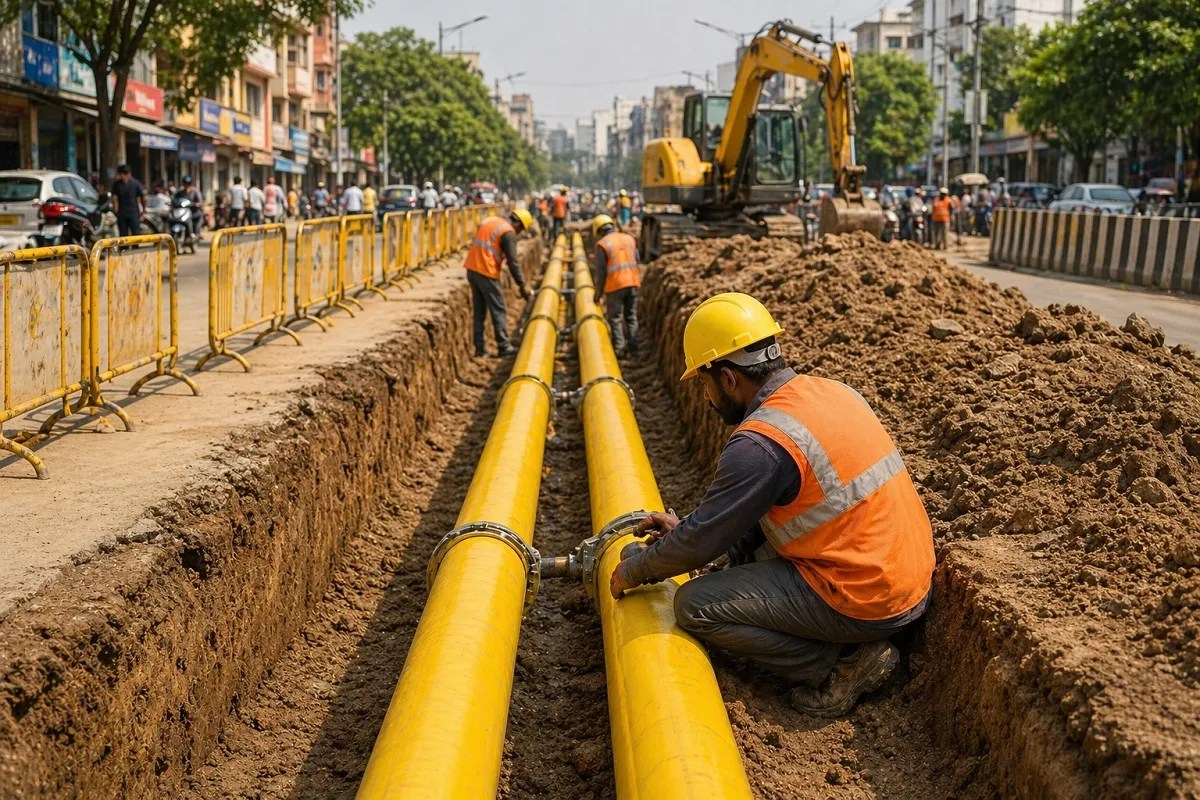
In Raipur, work is set to begin on laying a domestic gas pipeline network similar to the city’s existing water infrastructure. Following zone-level surveys, the project will commence under the authorisation of the Ministry of Petroleum and Natural Gas, which has appointed Haryana City Gas to execute the work.
On Tuesday, Municipal Commissioner Vishwadeep held a meeting at the Corporation Headquarters with representatives from the agency and engineers from the Water Works and City Investment departments.
Key Operational Guidelines
- Infrastructure Protection: The Commissioner emphasised that the installation must ensure existing water pipelines remain undamaged.
- Modern Techniques: To minimise the disruption caused by digging up streets and roads, the project will utilise hydraulic underground technology, similar to the methods used for laying subterranean electrical cabling.
- Permits and Fees: As the project is in its initial phases, Haryana City Gas has been directed to obtain the necessary No Objection Certificates (NOCs) and pay the prescribed fees to the Raipur Municipal Corporation before starting work.
Benefits for Residents
The transition to Piped Natural Gas (PNG) is expected to offer several advantages:
- End of Cylinders: Residents will no longer need to book or wait for LPG cylinder deliveries.
- 24/7 Supply: Much like mains water, gas will be available continuously via the pipeline.
- Cost and Safety: PNG is typically more cost-effective than LPG. Furthermore, the system includes advanced leakage control and monitoring, making it a safer alternative.
- Environmental Impact: The shift is expected to contribute to a reduction in local pollution levels.
The Network Layout
The gas network will be structured through an underground grid:
- Primary Feed: Gas will be sourced from major national pipelines (such as the Mumbai–Nagpur–Jharsuguda line).
- Distribution: This will be funnelled through a network of smaller pipelines branching into residential colonies.
- Direct Access: The pipes will lead directly into individual kitchens, mirroring the convenience of a standard water connection.