
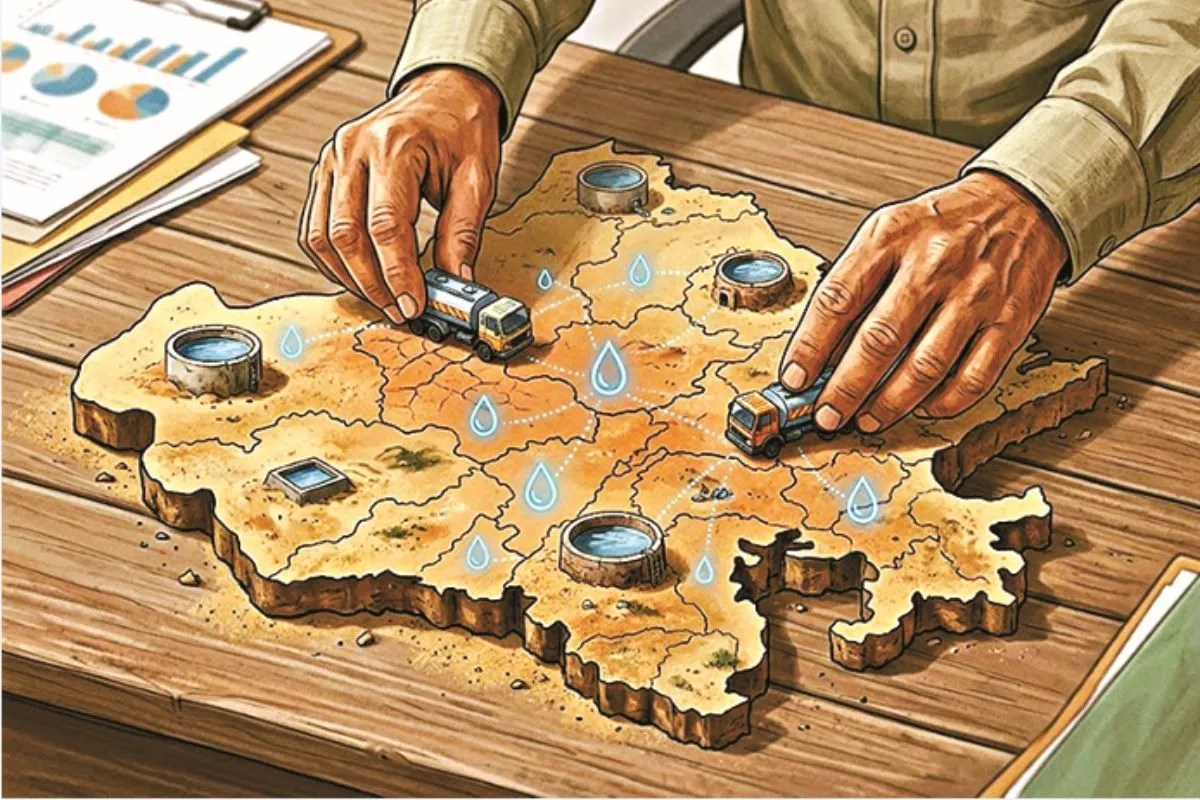
Jaipur: The Rajasthan government has stepped up preparations to deal with the crisis, as drinking water availability from existing sources is feared to fall by up to 30 per cent in the coming months because of low rainfall.
The Public Health Engineering Department (PHED) is preparing district-wise contingency plans. For emergency arrangements, district collectors have been given powers to get proposals for drinking water works worth up to Rs 75 lakh in each district approved between October and December.
The contingency plan is assessing the present condition of drinking water sources, groundwater availability, the status of tubewells and open wells, and the possibility of alternative water sources. Based on reports from the districts, areas where water supply is more likely to be affected in summer will be identified.
In such areas, priority will be given to drilling new tubewells, replacing faulty pump-motors, repairing pipelines and other necessary works. In areas facing a drinking water shortage, proposals for supplying water by tankers or other means, in coordination with the PHED, can also be prepared.
Situation Better in Some Areas Including Kota
The situation is said to be relatively better for now in some areas, including Kota, Jhalawar, Deeg and Banswara. Planning is also under way for a new arrangement for allocating water for irrigation or running canals.
Rainfall Situation in Districts
- 14 districts: low rainfall
- 12 districts: below-average rainfall
- 15 districts: normal rainfall
Emergency Works Up to Rs 75 Lakh
District collectors can send proposals for essential works needed to deal with drinking water emergencies in rural and urban areas to the Additional Chief Engineers concerned. Approval for these works will be issued online through the IFMS 3.0 module.
Instructions have been issued to give priority to small but essential works. These include replacing faulty pump-motors, developing water sources as alternatives to tubewells that suddenly dry up or fail, and repairing old and damaged pipelines.
“A contingency plan is being prepared after taking reports on the condition of water sources from all districts,” said Devraj Solanki, Chief Engineer, PHED. “New tubewells, replacement of pump-motors and pipeline repairs will be identified as required.”