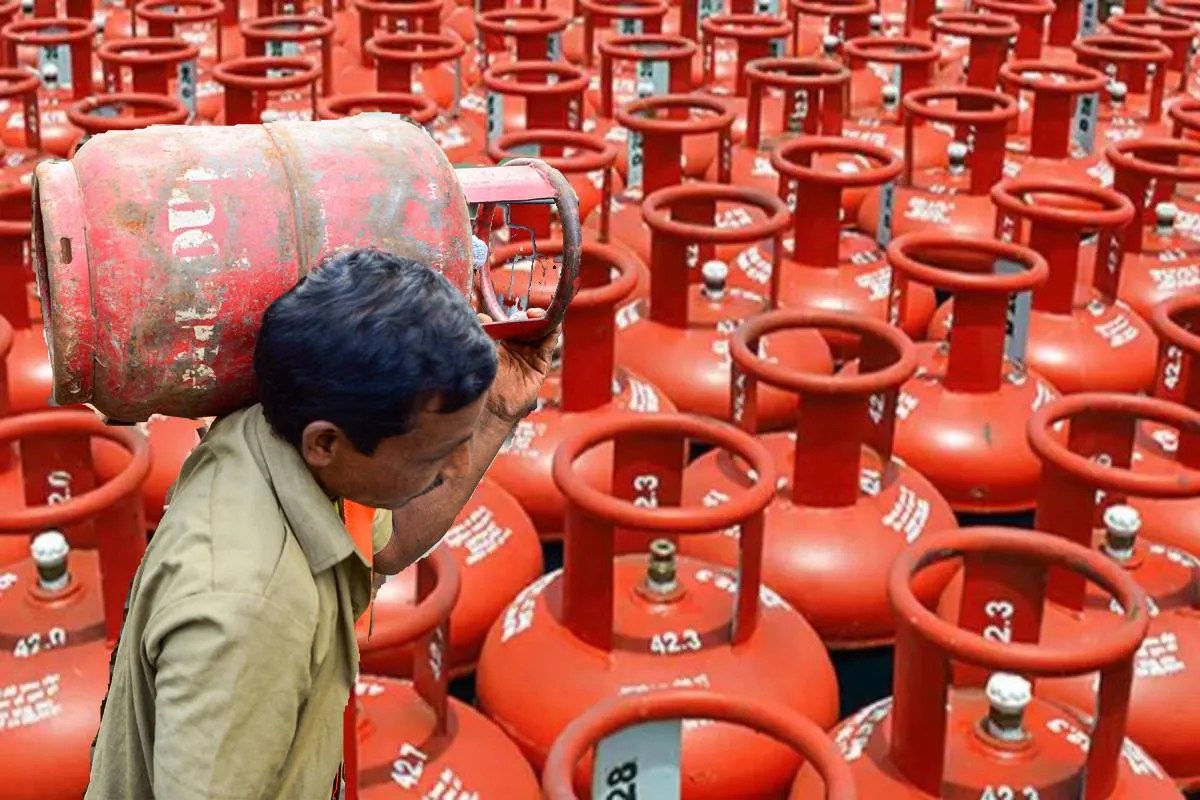
LPG Price Hike: The price of domestic LPG cylinders has been increased by ₹60, while the price of 19-kg commercial cylinders has gone up by as much as ₹115. The revised rates came into effect on Saturday, March 7. This has also had an impact in Madhya Pradesh. In many districts of MP, the price has reached close to ₹1000, which is even higher than in the major metropolitan cities of Delhi, Mumbai, Kolkata, and Chennai. Know in which city in MP the cooking gas cylinder has become the most expensive.
Price of Cylinder in 5 Major Cities
LPG Cylinder Prices in Major Cities of the State Now
Bhopal – ₹918
Indore – ₹941
Gwalior – ₹996
Jabalpur – ₹919
Ujjain – ₹972
Among these, Gwalior is seeing the highest price. Earlier, a cylinder here used to cost ₹936.50, which has now increased to approximately ₹996.50.
Most Expensive Gas in Narmadapuram
The most expensive cylinder in the state will be available in Narmadapuram. Consumers here will now have to pay around ₹1035 for one cylinder. Besides, in many districts, the price has reached close to ₹1000.
Morena – ₹937
Bhind – ₹936
In Niwari, Tikamgarh, Jhabua, Datia, Sheopur, Shivpuri, and Ratlam, the price has also reached ₹991 or more.
This means that in more than half of the districts in Madhya Pradesh, a gas cylinder will now cost above ₹900.
Relatively Lower Prices in Some Districts
The prices remain slightly lower in some districts of the state. In Shajapur and Sehore, a cylinder will be available for approximately ₹918.50. Additionally, prices are relatively lower in districts like Seoni, Sagar, Vidisha, Damoh, Raisen, Panna, Umaria, and Sidhi.
Previous Increase in Cylinder Prices
LPG prices were last increased on April 8, 2025. However, on March 8, 2024, on the occasion of Women’s Day, the central government had also reduced cylinder prices by ₹100. Following this, gas prices have been increased once again.
Gas Becomes More Expensive Than These 4 Major Indian Metros in MP
Delhi – ₹913
Mumbai – ₹912
Kolkata – ₹939
Chennai – ₹928.50
Commercial Cylinders Already More Expensive
It is worth noting that before domestic gas cylinders, the prices of commercial cylinders were also increased on March 1, 2026. At that time, the rates for 19 kg cylinders were increased by about ₹31. Now, the increase in domestic gas cylinder prices will directly affect common consumers.
Reasons for Gas Price Increase
The increase in gas prices comes at a time when there are apprehensions of disruption in energy supply due to escalating tensions in the Middle East. The growing conflict between the US, Israel, and Iran has heightened concerns about gas supply in the international market. For this reason, the government has already started preparations to increase production.
Order Issued to Increase LPG Production
On March 5, the central government, using its emergency powers, ordered all oil refinery companies in the country to increase LPG production. The government has directed refineries to primarily use propane and butane for manufacturing LPG. Furthermore, companies have been instructed to supply these gases only to government oil companies.
These Companies are Included
– Indian Oil Corporation (IOC)
– Hindustan Petroleum (HPCL)
– Bharat Petroleum (BPCL)
The government states that the objective is to ensure uninterrupted supply of gas cylinders to consumers.
How Gas Cylinder Prices are Determined
LPG prices are not directly set by the government. Every month, oil companies determine the base price based on the international market. The price determination primarily involves three factors:
- LPG price in the international market
- Value of the Rupee against the Dollar
- Transport and distribution costs
- Subsequently, the final retail price is determined by adding taxes, transportation expenses, and dealer commissions.
- In the case of subsidised cylinders, the government bears a portion of the price, while consumers have to pay the full price for non-subsidised cylinders.
Government Action Under Essential Commodities Act
The government has issued the order to increase LPG production under the Essential Commodities Act, 1955. This law empowers the government to issue directives to companies to control the supply and prices of essential commodities. The government had previously invoked this law during the Ukraine war. At that time, oil companies were instructed not to allow fuel shortages in the country and not to export excessively.
What is LPG?
LPG, or Liquefied Petroleum Gas, is primarily a mixture of two gases: propane and butane. Both these hydrocarbon gases are derived during the refining of crude oil. They are used not only for domestic cooking gas but also in the plastics industry, as industrial fuel, and in the manufacturing of various other products.